
Understanding Beard Growth: Why Thickness Varies from Person to Person

Before jumping into solutions, it’s important to understand how beard growth actually works.
Beard growth is primarily controlled by:
1. Genetics
Your DNA determines:
- How many hair follicles you have on your face
- How sensitive they are to DHT (a hormone linked to facial hair growth)
- The natural growth pattern of your beard
This is fixed — but it does NOT define your final potential appearance.
2. Hormones (Testosterone & DHT)
Testosterone is converted into DHT, which stimulates facial hair growth. However:
- Higher sensitivity = thicker beard growth
- Lower sensitivity = patchy or slower growth
- Lifestyle habits can indirectly influence hormone balance.
3. Blood Circulation
Hair follicles require oxygen and nutrients. Poor circulation leads to:
- Weak follicles
- Slow growth
- Patchy beard areas
Improving circulation is one of the most overlooked growth strategies.
4. Skin and Follicle Health
- Healthy skin = active follicles.
If your skin is dry, inflamed, or clogged, beard growth slows down significantly.
Nutrition: Fueling Beard Growth from Within
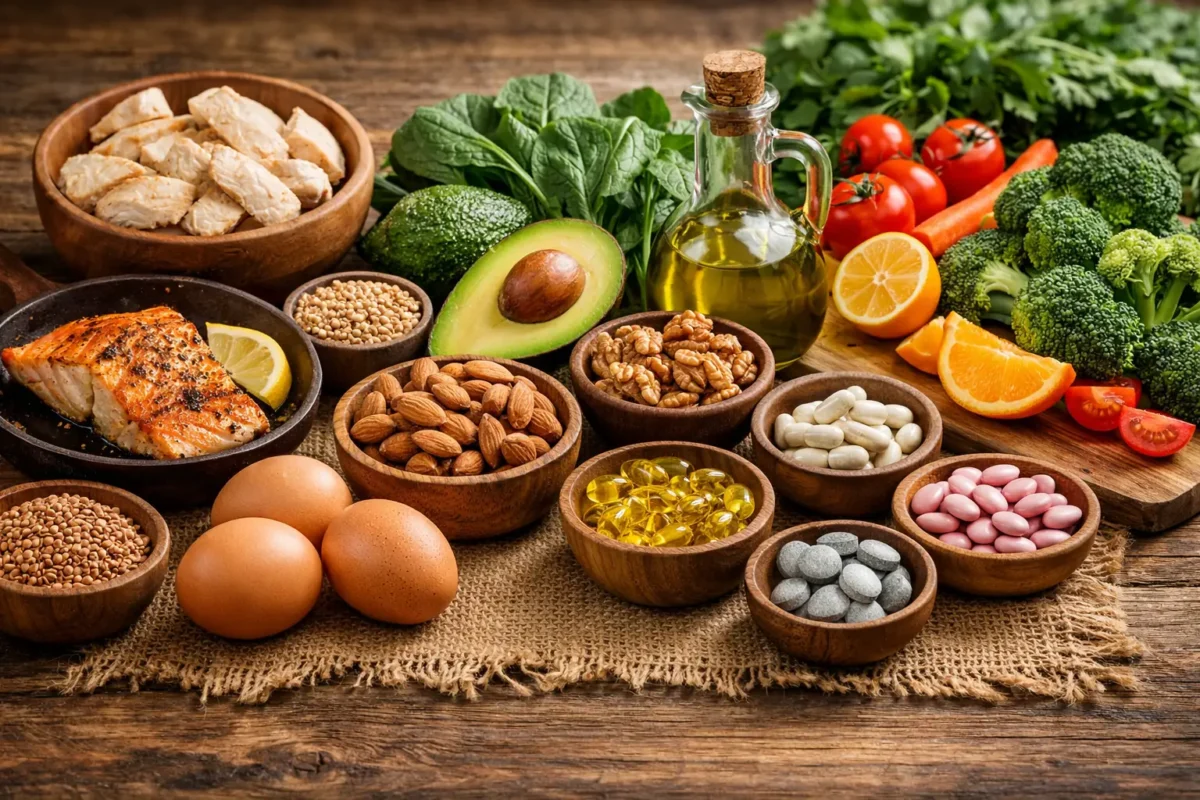
A beard cannot grow strong without proper building blocks. Your hair is made of keratin protein, meaning your diet must support protein production and hormone balance.
Essential nutrients for beard growth:
 Protein
- Eggs
- Chicken
- Fish
- Lentils
Protein strengthens hair structure and supports new follicle development.
 Healthy Fats
- Almonds
- Walnuts
- Avocados
- Olive oil
Healthy fats support hormone production, including testosterone balance.
 Vitamins & Minerals
- Vitamin A → supports skin renewal
- Vitamin C → boosts collagen and follicle strength
- Vitamin E → improves blood circulation
- Zinc → supports testosterone production
- Biotin → strengthens hair strands
Poor diet = weak beard growth.
Balanced diet = stronger, fuller beard over time.
Improve Blood Flow for Stronger Follicle Activation
One of the most effective natural methods to increase beard thickness is improving blood circulation.
How to do it:
 Regular Exercise
- Weight training
- Running or brisk walking
- HIIT workouts
Exercise naturally increases testosterone and circulation.
Facial Massage (5–10 minutes daily)
Massaging the beard area:
- Stimulates dormant follicles
- Improves nutrient delivery
- Encourages even growth
Use circular motions with light pressure for best results.
Warm Water Therapy
Warm water:
- Opens pores
- Improves blood flow
- Helps absorption of beard oils
Proper Skin Care: The Foundation of Beard Growth
Most people focus only on hair — but beard growth actually starts from the skin underneath.
A proper skin routine includes:
Cleansing
Wash your face twice daily to remove:
- Dirt
- Excess oil
- Dead skin cells
Exfoliation (2–3 times per week)
Exfoliation helps:
- Unclog pores
- Activate dormant follicles
- Improve skin texture
Moisturizing
Dry skin can weaken follicles and cause itching.
A good moisturizer or natural oil helps maintain balance.
Sleep, Stress & Hormonal Balance
Your beard does not grow only during the day — it regenerates during sleep.
During deep sleep:
- Growth hormones are released
- Testosterone levels stabilize
- Hair follicles repair themselves
Recommended routine:
- 7–9 hours of sleep daily
- Avoid late-night screen exposure
- Maintain a consistent sleep schedule
Stress Impact:
High stress increases cortisol, which can:
- Slow hair growth
- Cause patchiness
- Weakens follicle activity
Managing stress is essential for beard development.
The Importance of Patience During Early Growth Stages
Many men stop too early and assume their beard is not growing properly.
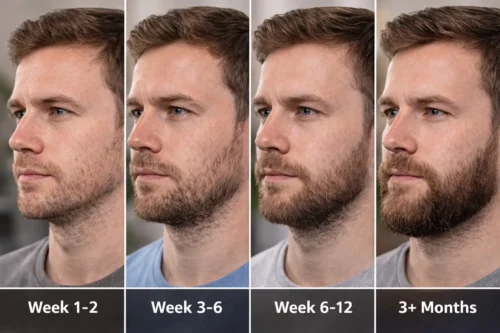
Beard growth stages:
- Week 1–2: Light stubble appears
- Week 3–6: Patchy and uneven growth
- Week 6–12: Areas start filling in
- 3+ months: Visible thickness improves
The biggest mistake is trimming too early.
Let your beard grow freely for at least 6–8 weeks before shaping it.
Natural Beard Oils: Supporting Growth the Right Way
Natural oils do not magically create new follicles, but they play a critical role in creating a favorable environment for growth.
They help by:
- Strengthening hair strands
- Softening coarse beard texture
- Reducing itchiness and irritation
- Improving skin hydration
- Supporting healthier-looking growth
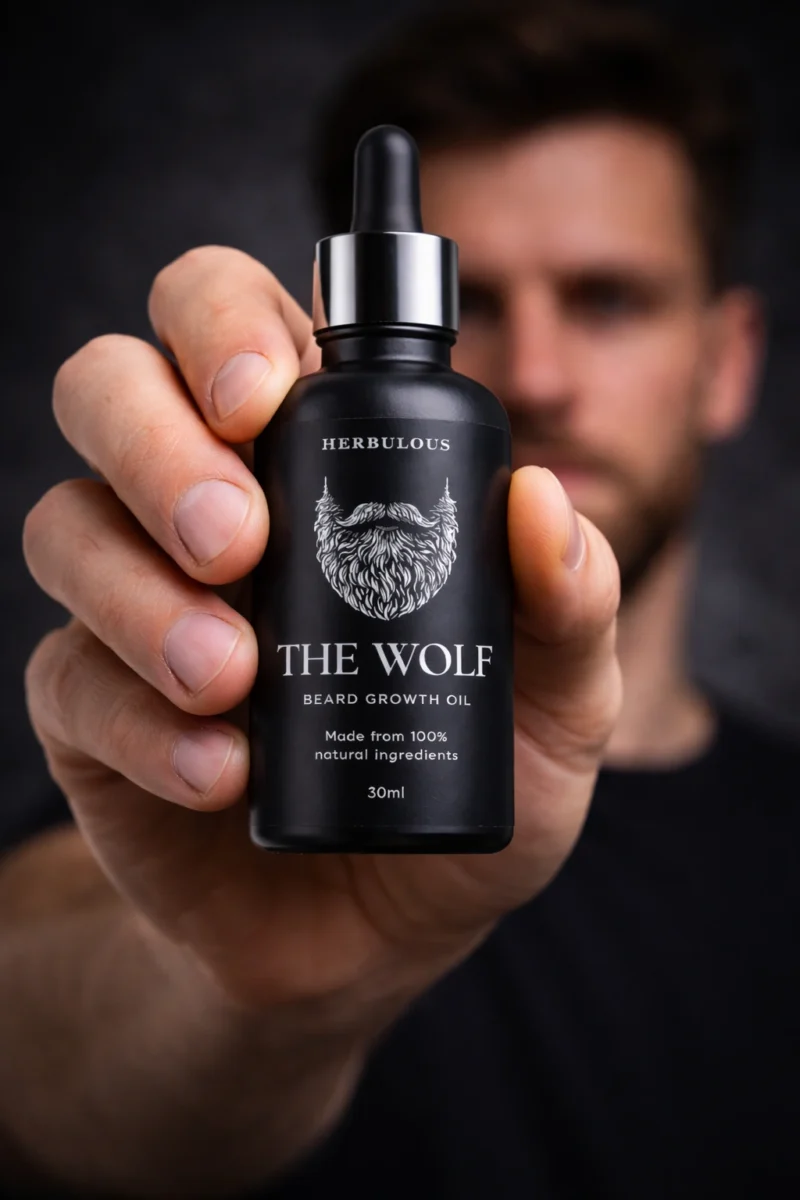
At Herbulous, our formulation — The Wolf Beard Growth Oil — is designed with natural ingredients that help nourish the skin and support a stronger beard appearance over time.
When used consistently, it helps:
- Improve beard softness and manageability
- Reduce the patchy appearance visually
- Support a healthier follicle environment
- Enhance the overall beard density look
 Important: Beard oil works best when combined with proper diet and grooming habits — not as a standalone solution.
Grooming Techniques That Instantly Improve Beard Appearance
Even before your beard fully develops, proper grooming can dramatically improve how it looks.
Effective grooming habits:
Beard Brushing
- Distributes natural oils
- Trains hair direction
- Makes beard appear fuller
Wooden Comb Usage
Reduces static and prevents breakage.
Neckline Maintenance
A clean neckline makes your beard look:
- More defined
- Thicker
- More professional
Oil Application Routine
Apply beard oil after washing and before combing for best absorption.
Common Mistakes That Prevent Beard Growth
Avoid these if you want visible improvement:
- Shaving too frequently
- Using harsh chemical products
- Poor hydration
- Skipping skincare
- Inconsistent routine
- Stress and lack of sleep
Growing a thicker beard naturally is not about quick tricks or overnight results. It is about building the right foundation through nutrition, lifestyle, skin care, patience, and proper grooming habits.
With consistent effort and a natural care routine supported by products like The Wolf Beard Growth Oil, you can significantly improve both the health and appearance of your beard over time.